March turned out to be a rough month. For nearly the whole month I fought a nasty, nasty bug that just kept evolving from one affliction to another until finally the doctor agreed he should probably give me something to help me beat it. One of the little carrier monkeys who come through the museum with school groups infected me, I'm sure. It was one of the fiercest bugs I have caught in a long, long time. Even so, at this point I think it is safe to say I'm going to live. In fact, I feel pretty much back to my normal healthy self. So I have spent most of this week trying to catch up with my life, which somehow seems to have just gone on without me.
It is a good thing I was feeling healthier this Friday, because that morning I had two of the worst school groups I have had in a long time. I am happy to say that for the most part I have really positive experiences with school groups. However, I have come to the decision that 8th-12th graders are most likely to be something of a lost cause. My first group on Friday was an 8th grade group. Even better, their teacher had selected the "Art of Persuasion" lesson topic, which is meant to present art and architecture as means to persuade and shape opinions. This topic is absolutely something these students could understand--particularly with my comparisons with today's world. Unfortunately, oftentimes 8th graders simply refuse to speak because no one wants to take the chance they are going to seem foolish in front of their peers. For some reason I do not recall, at this age nothing matters more than what your peers think of you.
Anyhow, the lesson did not start off well. I took them to our "Men in Antiquity" gallery to compare a portrait head of Augustus with an earlier Roman Republican era portrait head of an old man. Once we arrived at the stop and they (pretty much) stopped talking, I realized some joker in the front had his iPod playing so loudly we could all hear the music coming from his pocket. I took care of that issue, but no matter what I did to develop a conversation about the portrait heads, I failed to get them to do more than stare at me with faint smiles on their faces. I am not afraid of silences, so I let them hang for awhile before I struggled on, hoping they would cave. They did not. Sadly, the rest of the lesson was essentially that same experience.
So that was discouraging. My next lesson was a more typical "Daily Life in the Ancient World" lesson with a class of 6th graders. Sixth graders are better than 8th graders in the sense that they are usually still willing to talk to you, so I expected this second hour of teaching to be better. It was better--the students were willing to talk about what they were seeing and asked some great questions. The trouble came when I brought them to the "Athletes and Competition" gallery to show them our Boxer's mosaic. Even though the mosaic was part of an ancient floor, curators chose to display it on the wall of the gallery. It is much easier to see it that way, and it also keeps it off of the floor, which is never a good place for something rare and valuable. Still, even on the wall, it is a tempting target for eager little fingers.
I have to say, I rarely have trouble with students touching artifacts at the Villa. It was a constant issue at LACMA, but here at the Getty I noticed it is much more rare. Well, Friday was that day of rare exceptions, and we had barely begun talking about the mosaic when a student reached out and touched the mosaic. I immediately gave them a forceful, "Do NOT touch" reminder. Half a minute later another student reached out and touched the mosaic. "I said don't touch! Was that not the first rule they talked to you about?" They nodded their heads. I continued. While we were talking, a student walked around from the back of the group and touched the mosaic. At that moment I pretty much lost it, and my raised voice threatening to remove the group from the galleries brought security sailing across the room to back me up.
I probably should have taken them out of the museum, but I felt guilty for losing my temper and stuck with the lesson. I am afraid my remaining school groups this year will pay for this group's violation of trust, however. It is an act of trust to set these antiquities out before people so they can see them, and it's disheartening how often it is violated. Just the other day one of my fellow educators told me some woman actually set her purse on one of the artifacts while she bent down to fix her shoe and had to be asked repeatedly by security to remove her purse! Such obliviousness constantly amazes me, and unfortunately it makes me ever less inclined to trust the public.
Sad, but true.
Saturday, April 4
Sunday, March 22
A Knidian Knockoff
A lot of energy is expended in museums attempting to define what a good museum "experience" is and how to promote it among visitors. Trying to put into words what makes a good museum "experience" is quite difficult and in many respects kind of pointless. A good museum experience is like porn--hard to define, but you know it when you see it. Last weekend, I saw it on my afternoon"Highlights" tour.
A highlights tour is just what it says--it features "highlights" of the collection. Of course, most of the objects in the galleries are there because they are a significant addition to the collection in some way, so really I can choose most anything I like to talk about. Last Saturday, I decided to talk about a small statue that was recently brought to my attention again. I was pleasantly surprised to find that this object really caught the interest of my group that day. Everyone was a part of the conversation and we got so caught up in the discussion that we spent nearly half an hour talking about it. Of course, I don't always get a group of people so willing to interact--some people just want to follow you around and listen--so I'm always especially delighted when such a group comes along.
Our discussion actually made me see the object anew, as tends to happen when you spend enough time talking to people about an object, and at the moment it is one of my favorite objects to talk about. So, I thought I would introduce you to this little three foot statue of Venus and give you an idea of what is so neat about it.
 This statue is a Roman copy (dating to about 175-200 CE) of a very famous sculpture made around 350 BCE by the Greek sculptor Praxiteles known as the Knidian Aphrodite. It depicts the goddess after (or before?) her bath, her hand attempting to hide her genitals from the voyeuristic eyes. The Romans were great lovers of Greek art and they often copied Greek works they particularly liked. Roman taste tended to prefer those works made by noted Greek sculptors or works that were famous--or notorious. In the case of Praxiteles' Knidian Aphrodite, you have it all: It was a very famous statue and it was made by Praxiteles, one of the most notable ancient Greek sculptors. So famous, in fact, that even six hundred years or so after the Knidian Aphrodite was made, copies like this example were being made for Romans. It is a very familiar practice, actually. For example, anyone visiting the Uffizi in Florence can take home a coffee cup or a mouse pad or even a small copy of Michelangelo's David. Michelangelo sculpted his David over five hundred years ago, yet here we are still replicating it for our own pleasure in the 21st century.
 The Colonna Venus, Vatican Museums, Rome, considered by some to be the most
faithful copy of the original Knidian Aphrodite.
When she saw the image Praxiteles made of her, Aphrodite was said to have lamented, "Alas! Alas! Where did Praxiteles see me naked?"
Like many of the copies we make of famous works of art today, the Roman copies did not necessarily copy a work exactly. They sometimes made some variations from the original, and it would not be surprising if that were the case with the Villa's knockoff of the original Knidia. Sadly, we will never know, because Praxiteles' original work does not survive--we know of it only from the numerous copies made in the ancient world. (It was one of the most famous and thus one of the most copied works of the ancient world.)
 Issues in variation in copies of the original statue aside, we should also remember that there are certainly differences in the way the Villa's statue looks today and the way it looked when it was fresh from the artists' workshop. For instance, we can still see traces of paint on the surface. Her hair and drapery would have been painted with the encaustic technique, mixing pigment with hot wax. There is no visible indication that Venus's skin was painted. Her eyes were originally inlaid, and since she has pierced ears, we know she once had earrings--and perhaps other pieces of jewelry as well. The paint, jewelry, etc. were used by ancient artists to make these sculptures appear more life-like. Judging by ancient accounts of sculptures being anchored to their bases because people feared they would suddenly spring to life, it seems that they thought artists sometimes succeeded too well.
 The original Aphrodite of Knidos was life-sized and created to be on public display. The copy at the Villa is much smaller, around three feet in height, suggesting it was probably displayed in the much more private context of a house. As a private sculpture it was probably decorative, of course, but it likely served another purpose too. By displaying this copy of a famously provocative statue by an acclaimed Greek sculptor the owner showed off his education and connoisseurship of art--not unlike the way the boxer's mosaic I wrote about awhile ago highlighted the owner's education and appreciation of literature. (Read about it here.)

Now for the reason behind the notoriety of Praxiteles' Knidian Aphrodite. As the story goes (according to the ancient Roman historian Pliny), the sculptor was commissioned by the city of Kos to sculpt a representation of Aphrodite. Praxiteles produced two sculptures: one of the goddess clothed and one of the goddess nude, going into or coming out of the bath. In our own time, it is not shocking to see female nudity in art, but in Praxiteles' time, female nudity in art was an offense to Greek sensibilities. The male nude was the ideal of human beauty, not the female. The citizens of Kos rejected the nude version of the goddess and chose the clothed one. The reject then went to Knidos, where it was placed in a temple as a cult statue to the goddess and gained fame as curious tourists from far and wide traveled to see the provocative image of the nude goddess. The Knidian Aphrodite has a permanent place in art history as one of the first recorded instances of female nudity in ancient Greek art that did not depict a nude female as a prostitute or victim of sexual assault, as was customary before Praxiteles shook things up.
It is tempting for me to get into issues of nudity--particularly female nudity--in ancient art, but I'll restrain myself. After all, I am planning a course dealing in part with that very issue, so there is likely to be a future post exclusively devoted to it.
A highlights tour is just what it says--it features "highlights" of the collection. Of course, most of the objects in the galleries are there because they are a significant addition to the collection in some way, so really I can choose most anything I like to talk about. Last Saturday, I decided to talk about a small statue that was recently brought to my attention again. I was pleasantly surprised to find that this object really caught the interest of my group that day. Everyone was a part of the conversation and we got so caught up in the discussion that we spent nearly half an hour talking about it. Of course, I don't always get a group of people so willing to interact--some people just want to follow you around and listen--so I'm always especially delighted when such a group comes along.
Our discussion actually made me see the object anew, as tends to happen when you spend enough time talking to people about an object, and at the moment it is one of my favorite objects to talk about. So, I thought I would introduce you to this little three foot statue of Venus and give you an idea of what is so neat about it.
 This statue is a Roman copy (dating to about 175-200 CE) of a very famous sculpture made around 350 BCE by the Greek sculptor Praxiteles known as the Knidian Aphrodite. It depicts the goddess after (or before?) her bath, her hand attempting to hide her genitals from the voyeuristic eyes. The Romans were great lovers of Greek art and they often copied Greek works they particularly liked. Roman taste tended to prefer those works made by noted Greek sculptors or works that were famous--or notorious. In the case of Praxiteles' Knidian Aphrodite, you have it all: It was a very famous statue and it was made by Praxiteles, one of the most notable ancient Greek sculptors. So famous, in fact, that even six hundred years or so after the Knidian Aphrodite was made, copies like this example were being made for Romans. It is a very familiar practice, actually. For example, anyone visiting the Uffizi in Florence can take home a coffee cup or a mouse pad or even a small copy of Michelangelo's David. Michelangelo sculpted his David over five hundred years ago, yet here we are still replicating it for our own pleasure in the 21st century.
 The Colonna Venus, Vatican Museums, Rome, considered by some to be the most
 faithful copy of the original Knidian Aphrodite.
When she saw the image Praxiteles made of her, Aphrodite was said to have lamented, "Alas! Alas! Where did Praxiteles see me naked?"
 Issues in variation in copies of the original statue aside, we should also remember that there are certainly differences in the way the Villa's statue looks today and the way it looked when it was fresh from the artists' workshop. For instance, we can still see traces of paint on the surface. Her hair and drapery would have been painted with the encaustic technique, mixing pigment with hot wax. There is no visible indication that Venus's skin was painted. Her eyes were originally inlaid, and since she has pierced ears, we know she once had earrings--and perhaps other pieces of jewelry as well. The paint, jewelry, etc. were used by ancient artists to make these sculptures appear more life-like. Judging by ancient accounts of sculptures being anchored to their bases because people feared they would suddenly spring to life, it seems that they thought artists sometimes succeeded too well.
 The original Aphrodite of Knidos was life-sized and created to be on public display. The copy at the Villa is much smaller, around three feet in height, suggesting it was probably displayed in the much more private context of a house. As a private sculpture it was probably decorative, of course, but it likely served another purpose too. By displaying this copy of a famously provocative statue by an acclaimed Greek sculptor the owner showed off his education and connoisseurship of art--not unlike the way the boxer's mosaic I wrote about awhile ago highlighted the owner's education and appreciation of literature. (Read about it here.)
Now for the reason behind the notoriety of Praxiteles' Knidian Aphrodite. As the story goes (according to the ancient Roman historian Pliny), the sculptor was commissioned by the city of Kos to sculpt a representation of Aphrodite. Praxiteles produced two sculptures: one of the goddess clothed and one of the goddess nude, going into or coming out of the bath. In our own time, it is not shocking to see female nudity in art, but in Praxiteles' time, female nudity in art was an offense to Greek sensibilities. The male nude was the ideal of human beauty, not the female. The citizens of Kos rejected the nude version of the goddess and chose the clothed one. The reject then went to Knidos, where it was placed in a temple as a cult statue to the goddess and gained fame as curious tourists from far and wide traveled to see the provocative image of the nude goddess. The Knidian Aphrodite has a permanent place in art history as one of the first recorded instances of female nudity in ancient Greek art that did not depict a nude female as a prostitute or victim of sexual assault, as was customary before Praxiteles shook things up.
It is tempting for me to get into issues of nudity--particularly female nudity--in ancient art, but I'll restrain myself. After all, I am planning a course dealing in part with that very issue, so there is likely to be a future post exclusively devoted to it.

Friday, March 20
Happy Spring!
My favorite flower at the Villa, the lovely Tulipa clusiana, or White Lady Tulip, recently made its seasonal debut. It's also known as the Candy Tulip.


Friday, March 13
Tuesday, March 10
Saving Daylight
While we may not be able to successfully save for retirement or anything else these days, at least we know we can still save daylight, eh? For weeks now I've been awaiting the return of Daylight Savings Time. I dislike losing an hour as much as anyone, but for me going through the fog of the time change is worth it to get that extra daylight in the evenings. It's nice to get off work and still have some daylight to burn. I especially like taking evening walks after work, and those are much more pleasant when it's still light outside. Although this week I'm feeling under the weather, I didn't let that stop me from spending some time outside. Aside from my daily walks, now that the promise of spring is beginning to be realized, I've been taking my work at the Villa outside as well. Sitting in the outdoor Classical theater in the sun with some reading is wonderfully relaxing.
I have a post planned for later this week on a new object in the galleries I recently discovered. The Villa only has two floors of galleries, so anytime I can find a "new" object in them to incorporate in my teaching, it makes my day. I look forward to sharing it with you. In the meantime, here are a few images from my week.
 This is me playing around with reflections in the Cycladic gallery. I have no photographic talent whatsoever, but that does not stop me from having fun with my little Powershot.


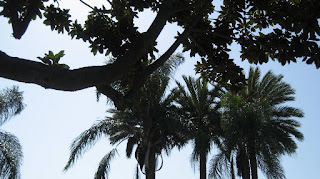

I have a post planned for later this week on a new object in the galleries I recently discovered. The Villa only has two floors of galleries, so anytime I can find a "new" object in them to incorporate in my teaching, it makes my day. I look forward to sharing it with you. In the meantime, here are a few images from my week.
 This is me playing around with reflections in the Cycladic gallery. I have no photographic talent whatsoever, but that does not stop me from having fun with my little Powershot.


Subscribe to:
Posts (Atom)